
Dr. Sanoop Kumar Sherin Sabu
A low-carbohydrate diet may be particularly useful in individuals with insulin resistance, type 2 diabetes or hypertriglyceridemia, particularly when it improves dietary adherence and reduces overall energy intake.
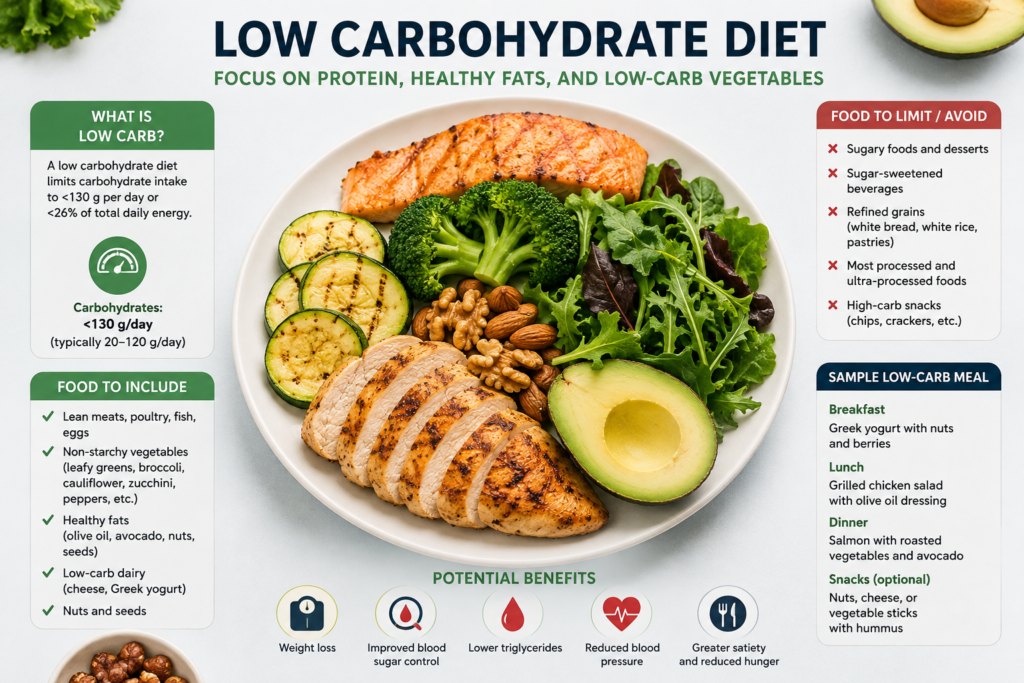
What does “low carbohydrate” mean?
A practical definition is:
- <130 g carbohydrate/day ie.
- In a day Carbohydrate must contribute to less than 500 Kcal of Energy
- ie. <26% of total energy intake
1 g carbohydrate = 4 kcal
Very-low-carbohydrate/ketogenic diets are considerably more restrictive, generally providing approximately 20–50 g carbohydrate/day.
Potential benefits
Low-carbohydrate diets may:
- Increase satiety
- Reduce hunger in some individuals
- Reduce triglycerides
- Improve glycemic control and insulin resistance in selected patients
- Produce weight loss when they result in sustained energy restriction
However, “low carbohydrate” does not automatically mean “high protein and low fat.” Fat and protein composition can vary considerably between low-carbohydrate diets.
Practical Issue
- Its very difficult to calculate the Grams of Carbohydrate in day to day life food items
- The individual must have a personalised dietician to help him daily basis.