Dr. Sanoop Kumar Sherin Sabu
Hypertriglyceridemia means having higher-than-normal levels of triglycerides (a type of fat) in the blood. High triglycerides can increase risk of heart disease, pancreatic disease and aging.
What to Eat
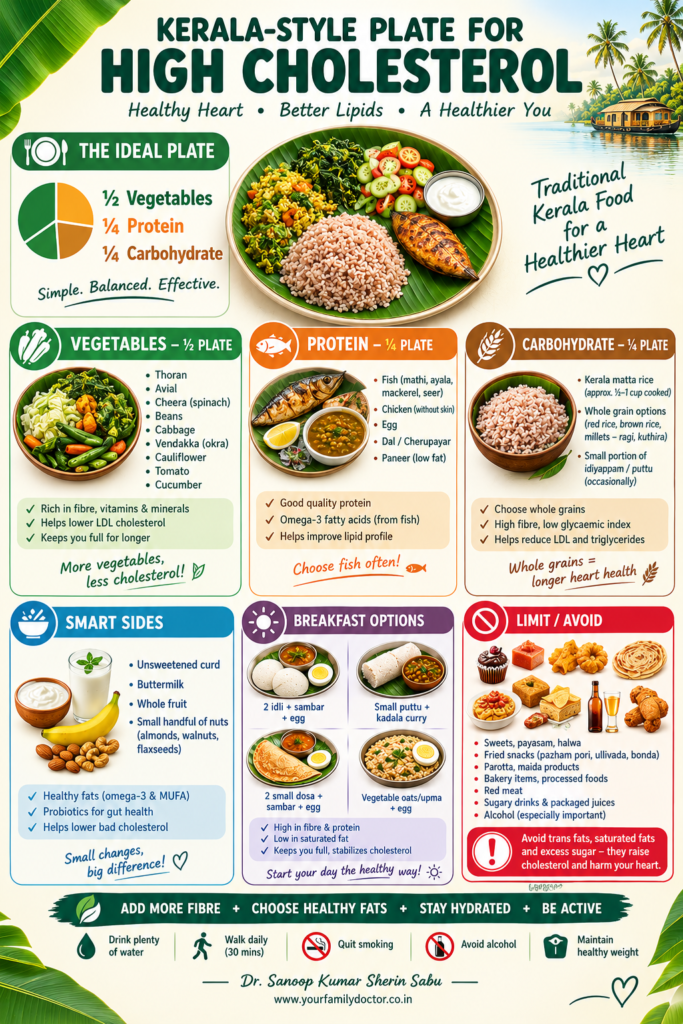
A triglyceride-friendly diet should focus on vegetables, whole foods, fiber-rich carbohydrates, healthy proteins, and unsaturated fats.
1. Eat plenty of vegetables
Include a variety of vegetables such as:
- Leafy greens
- Carrots
- Beans and other legumes
- Broccoli, cauliflower and cabbage
- Tomatoes
- Capsicum/peppers
- Gourds and other non-starchy vegetables
2. Choose whole grains instead of refined grains
- Oats
- Brown rice
- Whole-wheat foods
- Barley
- Millets
- Quinoa
Whole grains are generally preferable to refined grains because they provide more fiber and fit better into a heart-healthy eating pattern.
3. Choose healthy sources of protein
- Dal and lentils
- Chickpeas and beans
- Fish
- Skinless chicken
- Tofu and other soy foods
- Low-fat or fat-free dairy products
- Nuts and seeds in appropriate portions
4. Choose healthier fats
Prefer unsaturated fats, such as those found in:
- Nuts and seeds
- Avocado
- Olive, canola and other non-tropical vegetable oils
- Fatty fish
5. Choose whole fruit—but watch portions
Whole fruits are generally a better choice than fruit juice because they retain their fiber. Choose a variety of fruits and avoid turning fruit into a source of excessive added sugar.
What to Limit or Avoid ???
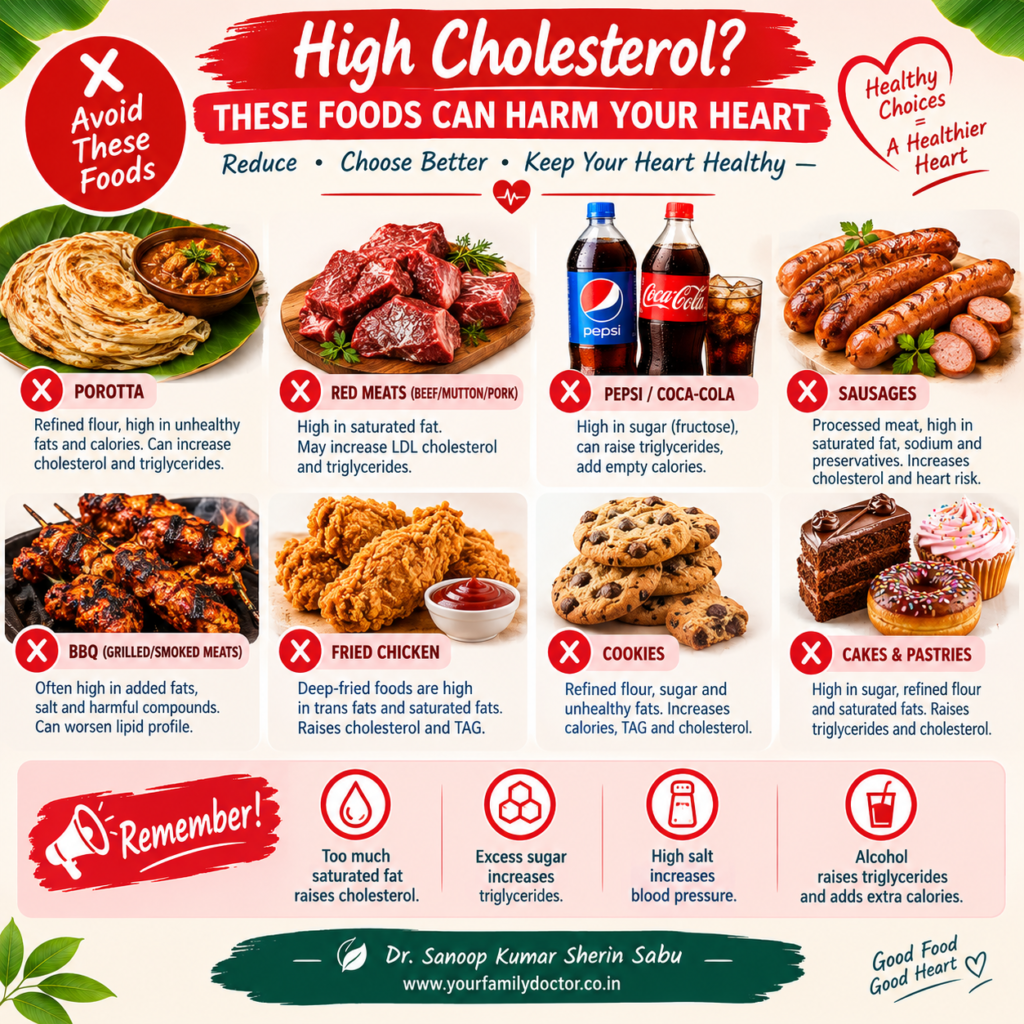
- Avoid Sugary drinks
- Soft drinks and soda
- Sweetened juices
- Energy drinks
- Sweetened tea and coffee
- Sugary beverages
2. Avoid Excess sweets and desserts
- Cakes
- Cookies
- Pastries
- Candy
- Ice cream
- Sweetened desserts – Pepsi, cococola
- Mithai and other sugar-rich sweets
3. Avoid Refined carbohydrates
Reduce frequent consumption of:
- White bread
- Maida-based foods
- Large portions of white rice
- Bakery products
- Refined breakfast cereals
- Other highly refined grain products
.
4. Avoid Excess saturated and unhealthy fats
- Fatty meats
- Processed red meat (sausages, salami, bacon)
- Fatty red meat (mutton, beef, pork)
- Fried meat, fatty curries, ghee/butter, coconut-heavy preparations
- Butter and ghee in excess
- Full-fat dairy products
- Deep-fried foods
- Many commercially prepared bakery foods
5. Avoid Alcohol
Avoid alcohol
The Role of Exercise
- At least 150 minutes of moderate-intensity aerobic activity per week, such as brisk walking or cycling, OR
- 75 minutes of vigorous activity per week, or an equivalent combination.
- Muscle-strengthening exercise at least 2 days per week.
- Reduce prolonged sitting and increase everyday movement.
Advantage of above diet??
This food style and exercise reduces not just high triglycerides, but also controls your diabetes, blood pressure Cholesterol and fatty liver. In long run, it reduces your cardiac disease risk.
If you are some with normal sugars and Total cholesterol and have just Triglyceride levels between 200 to 350mg/dl, try the above life style modifications for 1 month and recheck your fasting triglycerides. You will be amazed to see that it will become normal without medications, provided you have strictly followed the diet and have reduced at least 2 KG weight in 1 month.