
Dr. Sanoop Kumar Sherin Sabu
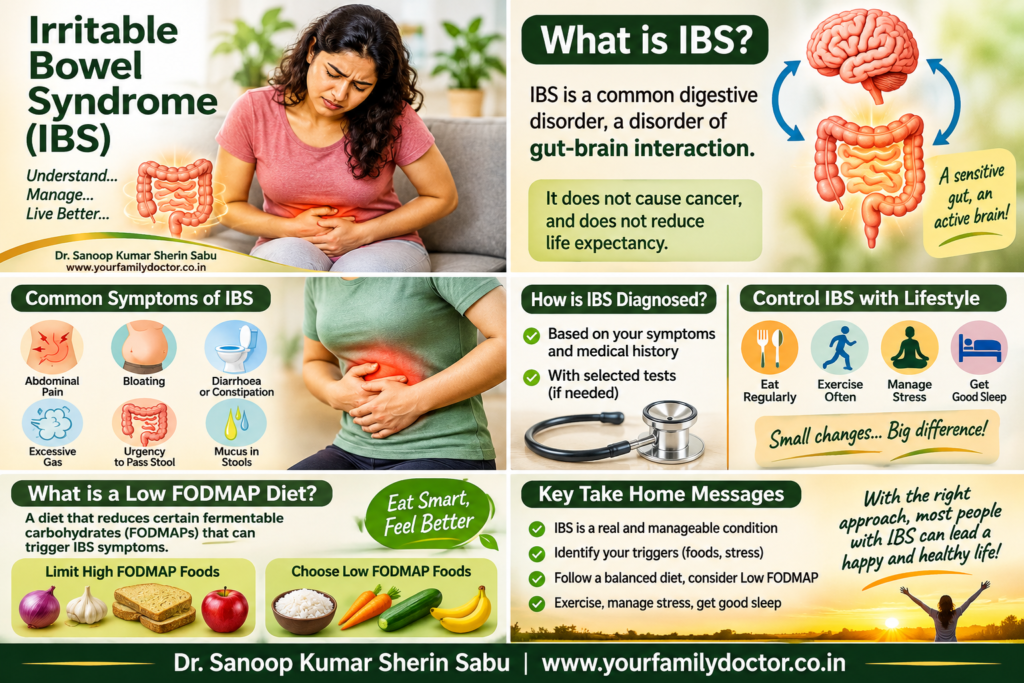
Understanding Your Gut, Identifying Triggers and Taking Control
Do you frequently experience abdominal pain, bloating, excessive gas, constipation or loose stools? Do these symptoms keep coming back despite normal investigations?
You may be experiencing Irritable Bowel Syndrome (IBS), one of the most common digestive disorders.
The good news is that IBS is a manageable condition. With the right dietary changes, lifestyle modifications and appropriate treatment, most people can achieve significant symptom relief and lead a completely normal life.
1. What is Irritable Bowel Syndrome (IBS)?
Irritable Bowel Syndrome (IBS) is a common digestive condition that affects the normal functioning of the intestine.
It is known as a Disorder of Gut-Brain Interaction (DGBI). This means that communication between the brain and the digestive system becomes altered, making the intestine more sensitive to normal digestive activities.
In people with IBS:
- The intestine may contract too quickly or too slowly.
- The gut may become unusually sensitive to normal amounts of gas or intestinal stretching.
- Certain foods may trigger excessive gas, bloating and abdominal discomfort.
- Stress, anxiety and disturbed sleep may worsen digestive symptoms.
An important point: IBS is a genuine medical condition. It is not imaginary, and symptoms are not simply psychological.
IBS does not cause cancer, does not damage the intestine and does not reduce life expectancy.
2. What are the common symptoms of IBS?
The symptoms vary from person to person. Some people experience predominantly constipation, while others have frequent loose stools. Many experience both.
Common symptoms include:
1. Abdominal pain or discomfort
- Recurrent cramping or pain, commonly around the lower abdomen.
- Pain may improve or worsen after passing stools.
- Pain may be associated with meals or bowel movements.
2. Bloating and abdominal distension
- A feeling of fullness or tightness in the abdomen.
- Excessive gas and frequent passage of flatus.
- The abdomen may appear swollen, particularly towards the evening.
3. Altered bowel habits
- Frequent loose stools or diarrhoea.
- Hard stools and difficulty passing stools.
- Feeling of incomplete evacuation.
- Alternating episodes of constipation and diarrhoea.
4. Other associated symptoms
- Urgency to pass stools, particularly after meals.
- Mucus in stools.
- A feeling of incomplete bowel evacuation.
- Symptoms that fluctuate with stress, sleep and food intake.
Types of IBS
Depending on the predominant bowel pattern, IBS is classified into three main types:
- IBS-C: IBS with predominant constipation.
- IBS-D: IBS with predominant diarrhoea.
- IBS-M: IBS with mixed constipation and diarrhoea.
3. How is IBS diagnosed?
There is no single blood test, scan or endoscopy that can confirm IBS.
IBS is primarily diagnosed based on the patient’s symptoms, medical history and clinical examination, supported by selected investigations when required.
Doctors use established symptom-based diagnostic criteria, such as the Rome IV criteria, to identify IBS.
Depending on the patient’s symptoms, the doctor may recommend:
- Complete blood count to look for anaemia.
- Blood tests for coeliac disease when appropriate.
- Inflammatory markers to assess for intestinal inflammation.
- Stool tests, including faecal calprotectin when indicated.
- Colonoscopy in selected patients, particularly when warning symptoms or age-related indications are present.
Does everyone with IBS require a colonoscopy?
No. Most patients with typical IBS symptoms and no warning signs do not require extensive investigations or routine colonoscopy.
Warning signs that should not be ignored
Not every episode of abdominal pain or altered bowel habits is IBS. Certain symptoms require further medical evaluation.
Consult a doctor if you experience:
- Blood in stools or black stools.
- Unexplained weight loss.
- Persistent fever.
- Anaemia.
- Persistent diarrhoea, particularly at night.
- New-onset bowel symptoms at an older age.
- A family history of colorectal cancer, inflammatory bowel disease or coeliac disease.
These symptoms may indicate another underlying condition that needs evaluation.
4. How can you control IBS through lifestyle modifications?
Lifestyle changes are an important part of IBS management. Small, consistent changes can make a significant difference.
A. Follow regular meal timings
- Eat meals at regular intervals.
- Avoid skipping meals or remaining hungry for long periods.
- Eat slowly and chew your food properly.
- Avoid eating very large meals at one time.
- Avoid lying down immediately after meals.
B. Identify your food triggers
Certain foods may worsen IBS symptoms, but the triggers vary between individuals.
Common triggers include:
- Excessive tea and coffee.
- Milk and certain dairy products.
- Onions and garlic.
- Very spicy and oily foods.
- Carbonated beverages.
- Certain fruits and artificial sweeteners.
Maintain a food and symptom diary to identify which foods consistently worsen your symptoms.
Remember, you do not need to avoid every food that is commonly associated with IBS.
C. Exercise regularly
Physical activity helps regulate bowel movements and improves overall digestive health.
- Aim for at least 30 minutes of moderate physical activity on most days.
- Walking, cycling, swimming and yoga are good options.
- A short walk after meals may help some people.
D. Manage stress
The gut and brain are closely connected. Emotional stress can increase gut sensitivity and worsen abdominal pain, bloating and altered bowel habits.
Try:
- Meditation and deep breathing exercises.
- Yoga and relaxation techniques.
- Spending time on activities you enjoy.
- Maintaining a healthy work-life balance.
E. Get adequate sleep
- Aim for 7–9 hours of sleep every night.
- Maintain consistent sleep and wake-up timings.
- Avoid excessive screen exposure before bedtime.
F. Maintain adequate hydration and fibre intake
- Drink sufficient water throughout the day.
- Include soluble fibre in your diet.
- Oats and psyllium husk (Isabgol) may help improve bowel regularity.
- Increase fibre gradually to avoid worsening bloating.
5. What is the LOW FODMAP diet?
The Low FODMAP diet is one of the most scientifically studied dietary approaches for managing IBS.
FODMAP stands for:
F – Fermentable
O – Oligosaccharides
D – Disaccharides
M – Monosaccharides
A – And
P – Polyols
These are specific types of carbohydrates and sugars that are poorly absorbed in the small intestine.
When they reach the large intestine, gut bacteria ferment them, producing gas. They can also draw water into the intestine.
In people with IBS, this may trigger:
- Excessive gas formation.
- Abdominal bloating.
- Abdominal pain.
- Diarrhoea or constipation.
A Low FODMAP diet reduces the intake of these fermentable carbohydrates to help control symptoms.
Which foods are HIGH in FODMAPs?
Some commonly consumed foods that may trigger IBS symptoms include:
| Food group | Examples |
| Vegetables | Onion, garlic, cauliflower |
| Fruits | Apple, mango, watermelon, pear |
| Dairy | Regular milk, condensed milk, ice cream |
| Cereals | Wheat-based bread and products |
| Pulses | Large portions of chickpeas, kidney beans and lentils |
| Sweeteners | Sorbitol, mannitol and certain sugar-free products |
Which foods are LOW in FODMAPs?
Several nutritious and commonly available foods can be included in a Low FODMAP diet.
| Food group | Examples |
| Cereals | Rice, oats, rice-based products |
| Vegetables | Carrot, cucumber, potato, spinach, tomato |
| Fruits | Orange, papaya, pineapple, firm banana |
| Protein | Eggs, fish, chicken and meat |
| Dairy alternatives | Lactose-free milk |
| Others | Plain curd in suitable portions, depending on individual tolerance |
Food portions matter. Some foods are low in FODMAPs in small quantities but may become high in larger servings.
How should you follow a Low FODMAP diet?
The diet is followed in three important stages:
Stage 1: Restriction (2–6 weeks)
Temporarily replace high-FODMAP foods with suitable low-FODMAP alternatives. This helps determine whether reducing these carbohydrates improves your symptoms.
Stage 2: Reintroduction (approximately 8–12 weeks)
Gradually reintroduce different FODMAP-containing foods, one group at a time, to identify which foods trigger your symptoms and in what quantities.
Stage 3: Personalisation
Develop a long-term diet based on your individual tolerance. Foods that do not trigger symptoms should be included again.
Important: A strict Low FODMAP diet is not meant to be followed lifelong. It should ideally be undertaken with the guidance of a qualified dietitian. The aim is to identify your individual food triggers while maintaining a balanced and nutritious diet.
6. Can IBS be completely cured?
IBS is a chronic condition in which symptoms may fluctuate over time. Some people experience prolonged symptom-free periods, while others have occasional recurrences.
Although there is no single permanent cure, symptoms can be effectively controlled.
Treatment depends on the predominant symptoms and may include:
- Dietary modifications.
- Fibre supplements for selected patients.
- Medicines for constipation or diarrhoea.
- Medications to relieve abdominal cramps and pain.
- Gut-directed psychological therapies in selected patients.
Treatment should be individualised rather than following the same approach for everyone.
7. Five important things to remember
- IBS is a genuine digestive disorder involving altered gut-brain interaction.
- IBS does not cause cancer or permanently damage your intestine.
- Food triggers vary from person to person. Avoid unnecessary dietary restrictions.
- Regular exercise, adequate sleep and stress management are important parts of treatment.
- With the right approach, most people with IBS can enjoy a healthy and productive life.
TAKE CONTROL OF YOUR GUT HEALTH
You do not have to live with persistent bloating, abdominal pain or unpredictable bowel habits.
Understanding your symptoms, identifying your triggers and following the right treatment plan can make a significant difference.
If you have recurrent abdominal discomfort or altered bowel habits, consult a gastroenterologist for proper evaluation and individualised treatment.
Your Family Doctor – You deserve a Happy, Healthy and Heavenly life.